
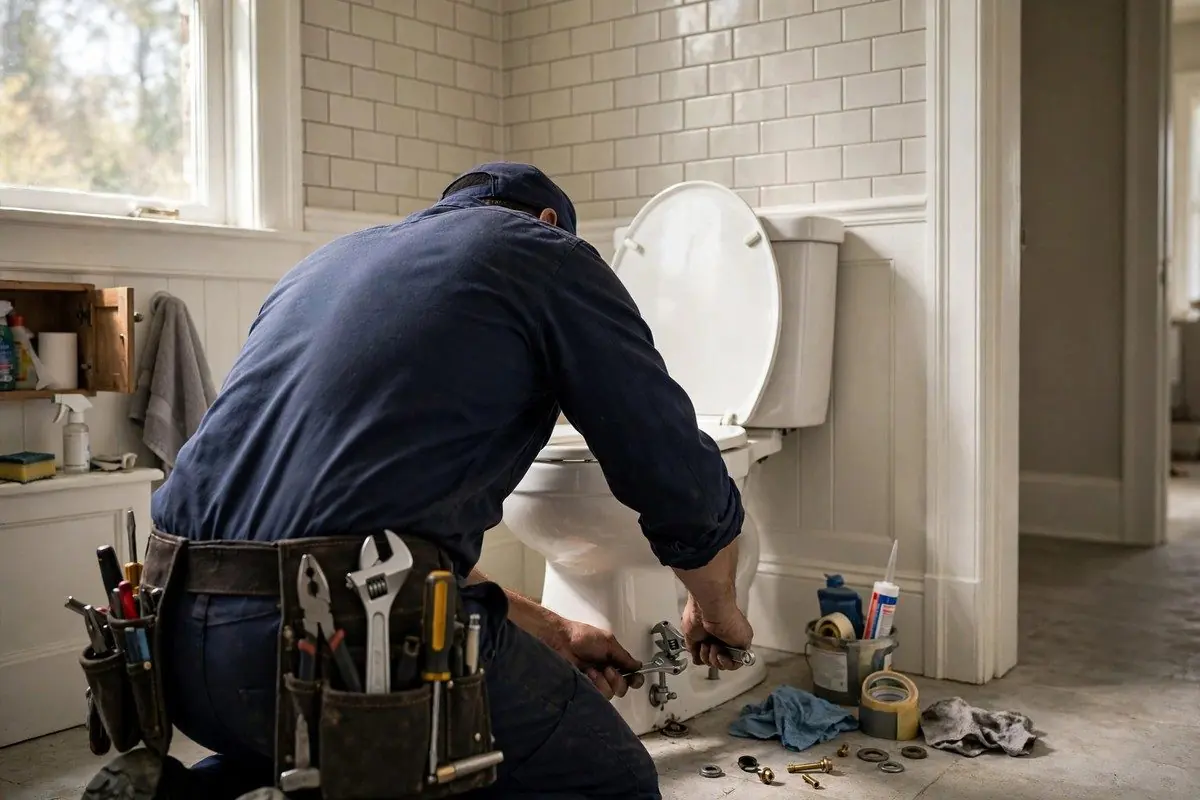
Overflowing toilet: stop the water first.
A toilet problem becomes an emergency when water keeps rising, when it leaks through the floor, or when it is the only toilet in the home. Reach behind the toilet and turn the shutoff valve clockwise. If the bowl is still filling, lift the tank lid and press the flapper down.
Most clogs sit in the toilet trap, but a toilet that backs up along with a tub or floor drain points to the main line. That is a sewer problem, not a toilet repair. See sewer line cleaning when more than one fixture is affected.
Clogged toilet.
Water rises and drains slowly. A plunger often clears it, and the plumber uses an auger when it does not.
Leak at the base.
Water seeps from under the bowl. The wax ring or the flange is usually the cause.
Running toilet.
Water trickles into the bowl after flushing. A worn flapper or fill valve wastes water.
Rocking or loose toilet.
Loose bolts or a damaged flange let the bowl move and break the seal.
Replacing a toilet is plumbing work under the state subcode, and the same standard sets rules for water use and traps. A simple repair, such as a flapper or fill valve, is routine maintenance. A new toilet or a moved drain is the point to ask about a permit.
Toilet calls reach Jersey City along Route 440 and Kennedy Boulevard.
Toilet repair or a new toilet.
A plumber starts with the cheapest fix that will hold. A new flapper or fill valve repairs most running toilets. A new wax ring and tightened bolts fix most base leaks. A cracked bowl or tank is not repairable, and an old toilet that clogs constantly may need replacing.
| Problem. | Likely cause. | Typical fix. |
|---|---|---|
| Constant running. | Worn flapper or fill valve. | Replace parts. |
| Water at the base. | Failed wax ring or loose bolts. | Reset toilet with new ring. |
| Weak flush. | Clogged rim holes or low water level. | Clean and adjust. |
| Cracked bowl or tank. | Impact or freezing. | Replace toilet. |
| Frequent clogs. | Old design or partial drain blockage. | Auger, camera, or replace. |
Many leaks under a toilet start slowly and rot the subfloor. If the floor around the toilet feels soft, tell the plumber, because the flange may need repair. A running toilet that wastes water is also a common cause of a high bill. See leak detection to separate the toilet from a hidden leak.
Bathrooms in older Bayonne buildings.
In an older multi-family building, a toilet in an upper-floor unit can leak onto the ceiling of the unit below. If the stain appears there first, tell the dispatcher so the plumber checks the flange and the supply line before the ceiling is opened.
In a rental, tell the landlord or property manager at the same time you call. The building shutoff and the repair responsibility may sit with them, and a record of when you reported it protects you.
Veolia operates Bayonne water and sewer service for the city. A toilet that runs constantly raises the water bill. Check the toilet first with a few drops of food coloring in the tank. If color shows in the bowl without flushing, the flapper is leaking.
What affects the price of toilet repair or installation.
Insurance note.
A sudden overflow that damages floors may be covered as accidental water damage. Gradual leaks usually are not. Photograph the damage and the failed part.
Want your real number? Call (718) 412-8453. We give a clear price before work starts.
What to do when a toilet overflows.
- Lift the tank lid and press the flapper down, or close the supply valve behind the toilet..
- Stop flushing and keep children and pets away from the water..
- Put towels down and move rugs. Wear gloves if the water is dirty..
- Do not use chemical cleaners in a bowl you may need to plunge..
- Call a plumber if other drains also back up, because the main line may be blocked..
Toilet overflowing right now?
Close the valve behind it and call the 24/7 line.
Toilet repair questions in Bayonne.
Yes. The line is open 24/7, including holidays. Call (718) 412-8453, say what the toilet is doing and the dispatcher books the next available plumber.
The wax ring or the flange has usually failed, or the bolts have loosened. The plumber lifts the toilet, replaces the ring and checks the flange.
A worn flapper, a bad fill valve or a water level set too high is the usual cause. Replacing the part stops the waste and the high bill.
Yes. The plumber removes the old toilet, checks the flange, sets the new one on a new wax ring and tests it for leaks.
If only the toilet is slow, it is the trap. If the tub, sinks or a floor drain also back up, it is the main line, and the plumber needs the sewer cleanout.