
Hidden leak or wet ceiling: when to call right away.
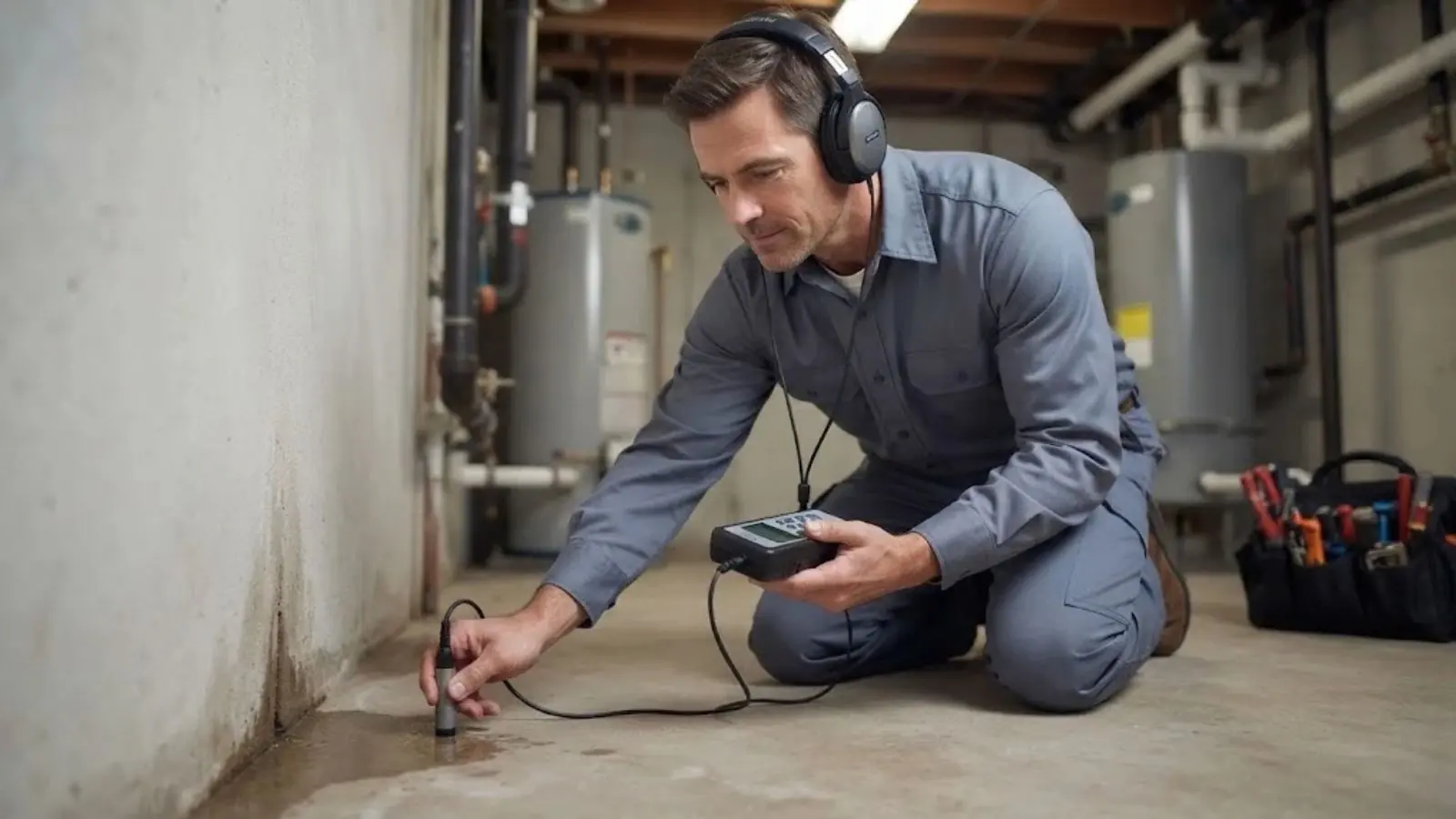
Leak detection finds where water is escaping without tearing out walls to look. The plumber uses a meter test, acoustic listening devices, thermal imaging and sometimes tracer gas, then opens only the spot where the leak sits.
Call the emergency line when water is coming through a ceiling, when a wall is wet or bulging, when you hear water running with every tap closed, or when the floor over a slab feels warm. These signs mean water is escaping now, and every hour adds damage.
Ceiling and wall stains.
A brown spot that grows after you run the shower or the dishwasher points to a supply or drain line above.
Water meter still moving.
Close every tap and appliance and watch the meter. Movement means a leak between the meter and the fixtures.
High water bill.
A jump with no change in use is a classic sign of a slow leak or a running toilet.
Low pressure or hissing.
A pipe losing water can drop pressure and hiss behind a wall.
Finding a leak is not a permitted job under the state plumbing standard, but repairing it may be. When the repair replaces pipe, the state plumbing subcode and the master plumber rule apply. Veolia, which operates the Bayonne water system, can tell you where its responsibility ends.
A running meter in a Hoboken apartment gets the same meter check and listening tests as one in Bayonne.
Meter still running or a high bill: finding the leak step by step.
The first test is the simplest. With all water off inside, check the meter. If it moves, the plumber isolates sections with shutoff valves to narrow where the water is going: the line from the meter, the supply inside the house, the water heater and the toilets.
A toilet that runs silently is a common hidden cause. Dye in the tank shows whether water slips past the flapper into the bowl. If the toilet passes, the plumber moves to the pipes in walls and under floors. See toilet repair if a fixture is the cause.
| Test. | What it shows. | Used for. |
|---|---|---|
| Meter check. | Whether water is leaving the system. | Every leak call. |
| Isolation test. | Which branch leaks. | Narrowing the area. |
| Acoustic listening. | Sound of water escaping a pressurized pipe. | Slab and wall leaks. |
| Thermal imaging. | Temperature difference from hot water leaks. | Floors and ceilings. |
| Camera. | Inside drains for drain line leaks. | Drain and sewer lines. |
Ceilings, crawl spaces, slabs and buried lines.
Ceiling and wall leaks start with a supply or drain line above and travel along framing before they show. The stain is often not directly under the leak. The plumber traces the water uphill to the source and cuts the smallest access hole possible.
Slab and under-house leaks sit below finished floors. A warm spot on a slab, the sound of water at night or an unexplained rise in the gas or water bill are clues. Detection tools pinpoint the line, so the repair opens one small section of floor and not the whole room.
Buried line leaks run between the street connection and the house. They can show as soft ground, a patch of wet pavement or a drop in pressure. For these, see water service line repair.
Irrigation, pool and yard leaks are a smaller share of calls on city blocks, but a leaking meter box or a sprinkler line near a foundation shows up the same way: a meter that keeps moving.
Leaks in Bayonne: old pipes, basements and the water meter.
Veolia operates Bayonne water mains and the city owns the system. Ask Veolia where its responsibility ends on your service line. A leak on the street side belongs to the utility, and a leak inside your property is yours. The meter test tells you whether to call at all.
In low-lying areas near Newark Bay and the Kill Van Kull, a basement can take on groundwater, which looks like a leak but is not. A plumber distinguishes seepage from a supply leak with the meter test. If water enters only after rain, see sump pump repair.
In a larger commercial building, long pipe runs and shared risers mean a leak may affect more than one tenant. Our commercial plumbing page covers that situation.
What affects the price of leak detection.
Insurance note.
Insurers often cover sudden, accidental water damage but not long-term leaks or wear. Document the stain, the meter reading and the date you first noticed it, because the history matters on a claim.
Want your real number? Call (718) 412-8453. We give a clear price before work starts.
Water meter running with everything off?
Call the 24/7 line. We book the next available plumber to trace the leak.
Leak detection questions in Bayonne.
Yes. The line is open 24/7, including holidays. Call (718) 412-8453 and the dispatcher books the next available plumber. If water is actively flowing, close the main valve first.
Turn off every tap and appliance, then watch the water meter. If it keeps moving, water is escaping somewhere. Call and tell us what you saw so the plumber can start with the right test.
Detection tools narrow the leak to a small area first. The plumber opens only the section where the leak sits and not the whole wall.
It can be. A running toilet, a dripping fixture or a pipe leak all raise the bill. A meter test separates leaks from higher use.
Veolia operates the water mains in Bayonne and the city owns the system, so a leak on the street side is theirs to address. Ask Veolia where its responsibility ends on your service line. A leak inside the property is the owner's.