
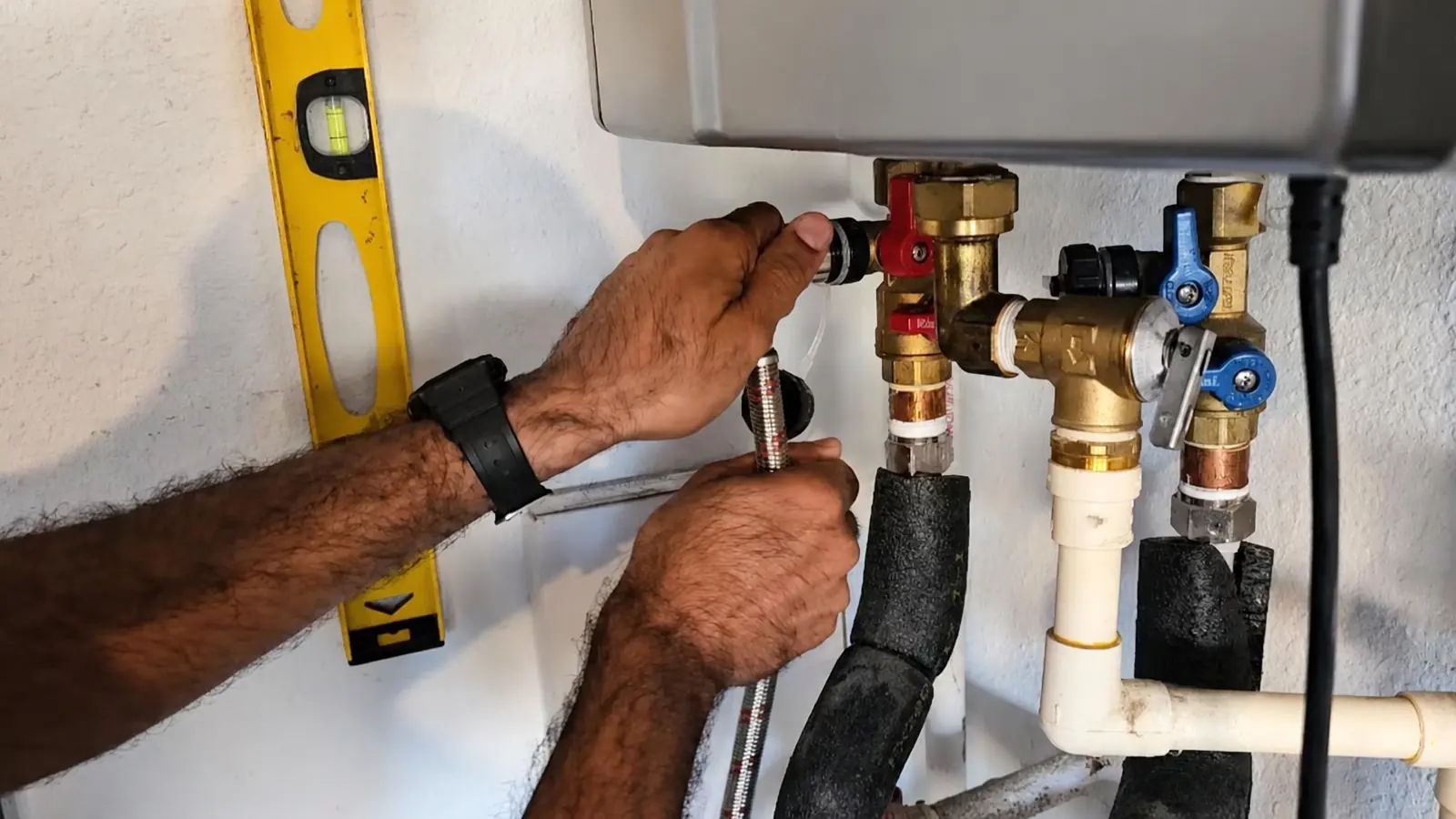
What a tankless water heater does and what it needs.
A tankless unit turns on when you open a hot tap, fires a burner or energizes elements, and heats the water through a heat exchanger. It saves space and avoids standby heat loss. In exchange, it needs a gas line sized for a high burst of demand, correct venting and clean water flowing through the exchanger.
Many problems trace to one of three things: scale on the heat exchanger, a gas supply that is too small, or a vent that is blocked or poorly installed. Error codes help the plumber find the cause quickly.
A tankless install changes gas, vent or electric work, so it is covered by the state plumbing subcode and usually by permit. According to PSE&G guidance, you should leave and call 1-800-880-7734 or 911 if you smell gas, and that applies to any gas appliance.
Owners in Jersey City ask us the same sizing questions, so the checklist above applies there as well.
Flush and descale: the maintenance most units need.
Hard water leaves mineral scale inside the heat exchanger. Scale narrows the passages, raises temperatures and triggers error codes. A flush and descale pushes a mild acid solution through the exchanger using the isolation valves, then rinses it clean.
How often a unit needs it depends on your water. Ask Veolia for its annual water quality report, which lists hardness and other results for the Bayonne system. Until you have the figure, a yearly check is a reasonable starting schedule.
- Isolation valves installed so the unit can be flushed..
- Inlet filter cleaned during each service..
- Gas pressure and venting checked at the same visit..
- Temperature setting confirmed for safety..
Does a tankless water heater leak?
It can. Leaks usually come from isolation valves, loose fittings, a cracked heat exchanger or condensate lines on high-efficiency units. A leak under the unit does not always mean the exchanger has failed, so the plumber traces the water to its source first.
| Leak location. | Common cause. | Fix. |
|---|---|---|
| Isolation valves. | Worn packing or loose nut. | Tighten or replace valve. |
| Bottom of the unit. | Heat exchanger leak. | Repair or replace unit. |
| Condensate line. | Blocked or disconnected drain. | Clear and reconnect. |
| Relief valve. | Pressure spike or faulty valve. | Test and replace valve. |
Tankless units in Bayonne homes.
Switching from a tank to tankless often means a larger gas line and a new vent through the wall or roof. In a row house or multi-family building, finding a legal vent path can decide whether tankless is practical at all.
During the January 2026 boil water advisory, the city suggested that people with softeners and filters run them through a regeneration cycle once the advisory lifted. If you have a softener upstream of a tankless unit, it also protects the exchanger from scale.
For a tank heater that is failing instead, see emergency water heater replacement.
What affects the price of tankless service.
Insurance note.
A failed unit is not a typical insurance claim, but water damage from a sudden leak may be. Keep the install record and service dates.
Want your real number? Call (718) 412-8453. We give a clear price before work starts.
What to do if a tankless unit leaks, errors or smells.
- If you smell gas, leave the building and call PSE&G at 1-800-880-7734 or 911 from outside..
- Shut off the water to the unit with its isolation valve if it is leaking..
- Turn the unit off at its power switch or gas valve and leave it off..
- Write down any error code on the display before you reset anything..
- Do not run a unit that is leaking or venting poorly. Call a plumber..
Tankless heater showing an error?
Call and tell us the code. We book the next available plumber.
Tankless water heater questions in Bayonne.
It depends on water hardness and use. A yearly flush is a reasonable starting point. Ask Veolia for its water quality report to see hardness for the Bayonne system.
Often yes. Codes point to ignition, flow, venting or heat exchanger faults. The plumber reads the code, tests the parts and explains whether repair or replacement makes sense.
Common causes are isolation valves, loose fittings, a blocked condensate line or a cracked heat exchanger. The plumber traces the water to find the actual source.
It depends on gas line size, vent path and wall space. The plumber checks all three before recommending a unit.
Yes. The line is open 24/7, including holidays. Call (718) 412-8453 and the dispatcher books the next available plumber.