
What waterproof cement is good for.
Hydraulic cement sets in minutes, even against running water. That makes it suited to a small, defined crack or a gap where a pipe passes through a wall. You press it into a prepared opening, hold it and let it cure.
It does not flex. A wall that moves, a crack that keeps widening or a floor joint that opens and closes will break the patch. It also cannot stop water that is pushing through many places at once.
| Condition. | Cement patch. | Better answer. |
|---|---|---|
| Single small crack, steady leak. | Often works. | Patch and watch the spot. |
| Gap around a pipe through the wall. | Often works. | Patch, then check the pipe. |
| Many cracks or damp patches. | Short lived. | Find the water source and drainage. |
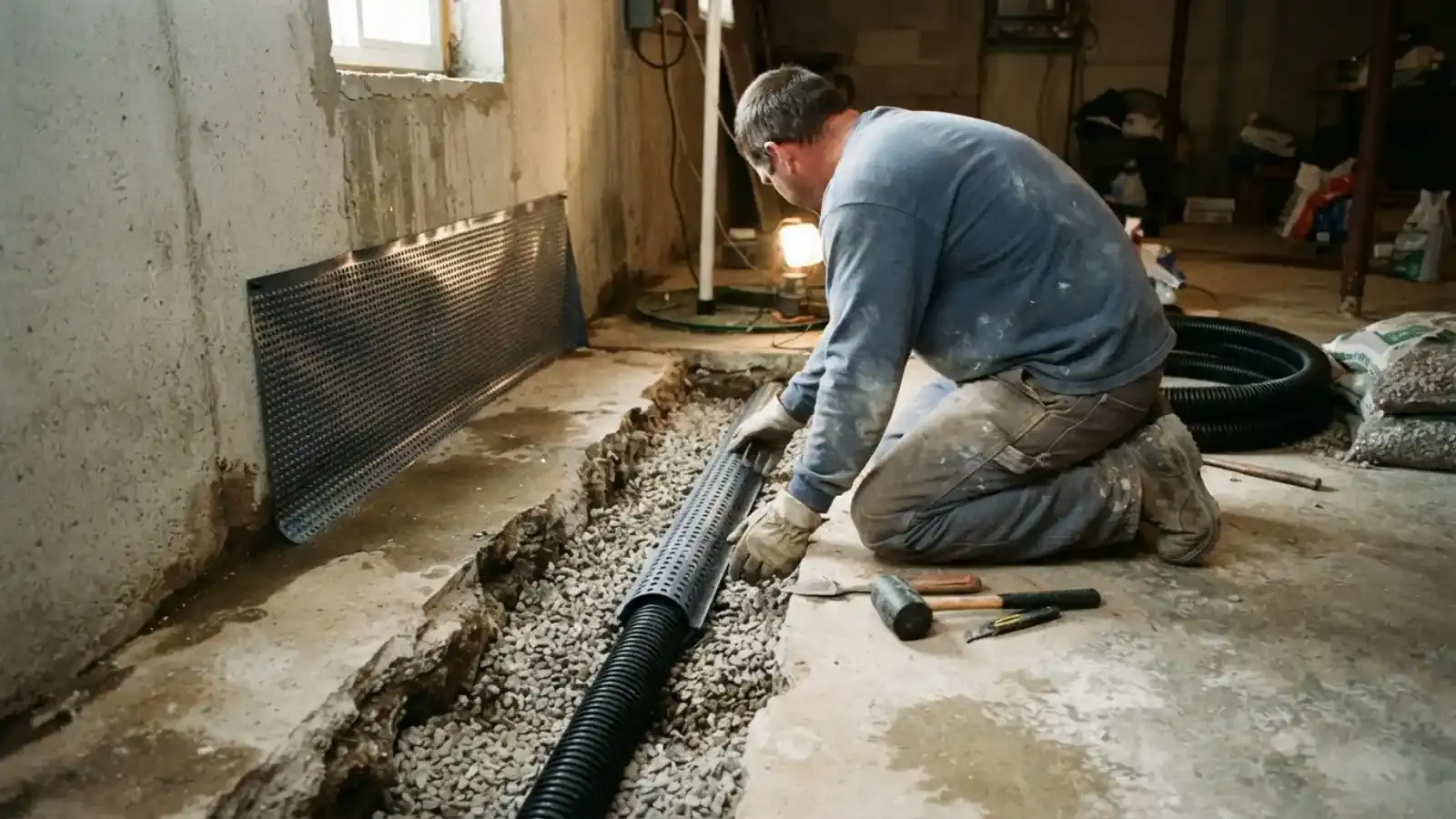
| Floor-wall joint seeping after rain. | Poor fit. | Drainage or a sump pump. |
| Wall bowing or growing cracks. | Not suitable. | Structural assessment. |
How to apply it properly.
- Chisel the crack into a clean V shape wider at the back than at the surface so the cement locks in.
- Brush away dust and loose material and wet the surface lightly.
- Mix a small batch. Hydraulic cement sets quickly, so mix only what you can place in a minute or two.
- Press the cement into the crack and hold it until it begins to firm.
- Keep the patch damp as it cures, following the product label.
A patch that dries and then leaks again at the edge tells you the crack is moving or the water pressure behind it is high. Do not keep stacking cement on it.
Find the water source before you patch.
- Is the water coming through a crack, a joint or the whole wall?.
- Does it appear only after rain, or also on dry days?.
- Do gutters and downspouts empty near the foundation?.
- Is the ground sloping toward the house?.
- Is there a sump pit, and does the pump keep up?.
Water that shows up on dry days may be a plumbing leak, not groundwater. A running meter with every tap closed points that way. Our leak detection page explains how we check. If the water is groundwater, basement waterproofing and a working sump pump deal with the cause.
Other products and what they are for.
Hydraulic cement is only one product on the shelf. Masonry waterproofing paint, crack sealers and injection resins each solve a different problem. Reading the label for what the product claims to do is the first step.
| Product. | Best use. | Not for. |
|---|---|---|
| Hydraulic cement. | Small active leaks and pipe gaps. | Moving cracks and many leak points. |
| Masonry waterproofing paint. | Damp walls with no running water. | Walls with active water pressure. |
| Crack injection. | Narrow cracks that need a flexible seal. | Wide gaps and bowed walls. |
| Interior drainage and sump. | Water entering at the floor edge. | Cosmetic dampness only. |
Paint over a leak hides the problem for a season. The water finds another way, and the paint peels.
Signs the problem is bigger than a patch.
- A crack wider at one end that keeps growing.
- A wall that bows inward or a horizontal crack across the wall.
- White mineral crust on the wall, called efflorescence, that returns after cleaning.
- Water at the floor and wall joint after every storm.
- A musty smell or mold in the basement.
Any of these calls for a closer look. A plumber can check the sump, the drains and the pipes. A structural issue like a bowing wall needs a qualified structural assessment, and a plumber should say so.
Questions to ask a contractor about a wet basement.
- What is the source of the water, and how did you find it?
- Is the fix on the outside, the inside or both?
- What happens during a heavy storm if the power fails?
- Is there a warranty, and what does it cover?
- Is a permit needed, and who files it?
A contractor who guesses the source or promises a cure before a look at the basement is not giving you a plan. Ask for a written scope that names the work and the materials.
A simple test for a leak or groundwater.
Tape a small square of plastic wrap to a damp wall section, sealing all four edges. Check it after a day. Moisture on the wall side of the plastic points to a leak from inside the wall or from outside. Moisture on the room side points to humidity condensing on the surface.
The test is rough, but it separates condensation from a leak. If the wall side is wet on a dry day, call for leak detection before any patching.
A dehumidifier can solve condensation. It will not solve a leak.
Keeping water away from the wall in the first place.
Extend downspouts several feet from the foundation and keep gutters clear. Grade the soil so it slopes away from the house. These steps cost little and reduce the water that reaches the wall.
Store belongings off the floor in a basement that has ever been wet. Plastic shelving and sealed bins protect what you keep there.
Bayonne note: flood projects and the flood zone check.
A city notice posted June 18, 2026, describes the Cottage Street Park flood mitigation project. It lists about 330 feet of new 36-inch relief sewer and a retention basin of roughly 5,300 square feet near Cottage Street, East 5th Street and Ingham Avenue. Projects like this aim at street flooding, and they do not change what is happening at your foundation.
Check the flood map for your address and ask your insurer what water damage they cover. We look at basements in Bayonne first, and also in Jersey City and Hoboken.
Source type: City of Bayonne public notice for the Cottage Street Park flood mitigation project.
Questions Bayonne homeowners ask about waterproof cement.
It stops a small crack or a gap around a pipe. It does not fix groundwater pressure or a moving wall.
It sets in minutes, which is why you mix small batches. Follow the label for curing.
The crack may be moving, or water pressure behind it is high. A drainage fix may be needed.
Yes. If the meter moves with all taps closed, ask for leak detection.
It aims at street flooding with a relief sewer and a retention basin. It does not seal a foundation, so a wet wall still needs its own fix.