
What a leak sensor does and what it does not.
Most leak sensors are flat pucks with two metal contacts on the bottom. Water bridges the contacts, the circuit closes and the device beeps. Smart models add Wi-Fi or a hub, so your phone gets a message even when you are at work. A few connect to an automatic shutoff valve that closes the main supply when a sensor trips.
A separate type watches the flow of water in the main line. It learns your normal use and alerts you when water runs for hours without a break, which is how slow leaks and running toilets show up. That kind of monitor catches leaks in walls that a floor sensor never touches.
| Device. | What it catches. | What it misses. |
|---|---|---|
| Puck sensor on the floor. | Water that reaches that spot. | Leaks inside walls, slabs and ceilings until water pools. |
| Smart sensor with phone alerts. | The same, plus alerts while you are away. | The same, and it needs Wi-Fi and batteries. |
| Sensor with automatic shutoff. | Leaks that wet a sensor, then stops the supply. | A leak that never reaches a sensor. |
| Whole-house flow monitor. | Continuous flow from slow leaks. | The exact location of the leak. |
Where to put sensors in a Bayonne house or apartment.
Put sensors where a failure would do the most damage and where water collects first. The low point of a room is the best spot because water runs downhill before it spreads.
- On the floor beside the water heater, or in its drain pan..
- Behind the washing machine and under the washer supply hoses..
- Under the kitchen sink and beside the dishwasher..
- Next to the basement floor drain and the sump pit..
- Behind the toilet and under bathroom vanities..
- Near the main water entry where the line comes through the foundation..
In a two-family house, give each unit its own sensors and tell the other household what the alert sounds like. A beep from an empty upstairs apartment is easy to miss and expensive to ignore.
Check the batteries when you change your clocks. A sensor with a dead battery is just a plastic puck.
The sensor went off: what to do next.
- Look at the sensor and the area around it. A wet puck beside a water heater or a washer points to the nearest source.
- Close the shutoff for that appliance. If water is spreading and you cannot find the source, close the main valve.
- Dry the area, then test the sensor so you know whether the leak continues.
- If nothing is visibly leaking, do the meter test: close every tap, watch the meter and note whether it moves.
- Call a plumber if the meter moves, the sensor trips again or you find damp drywall.
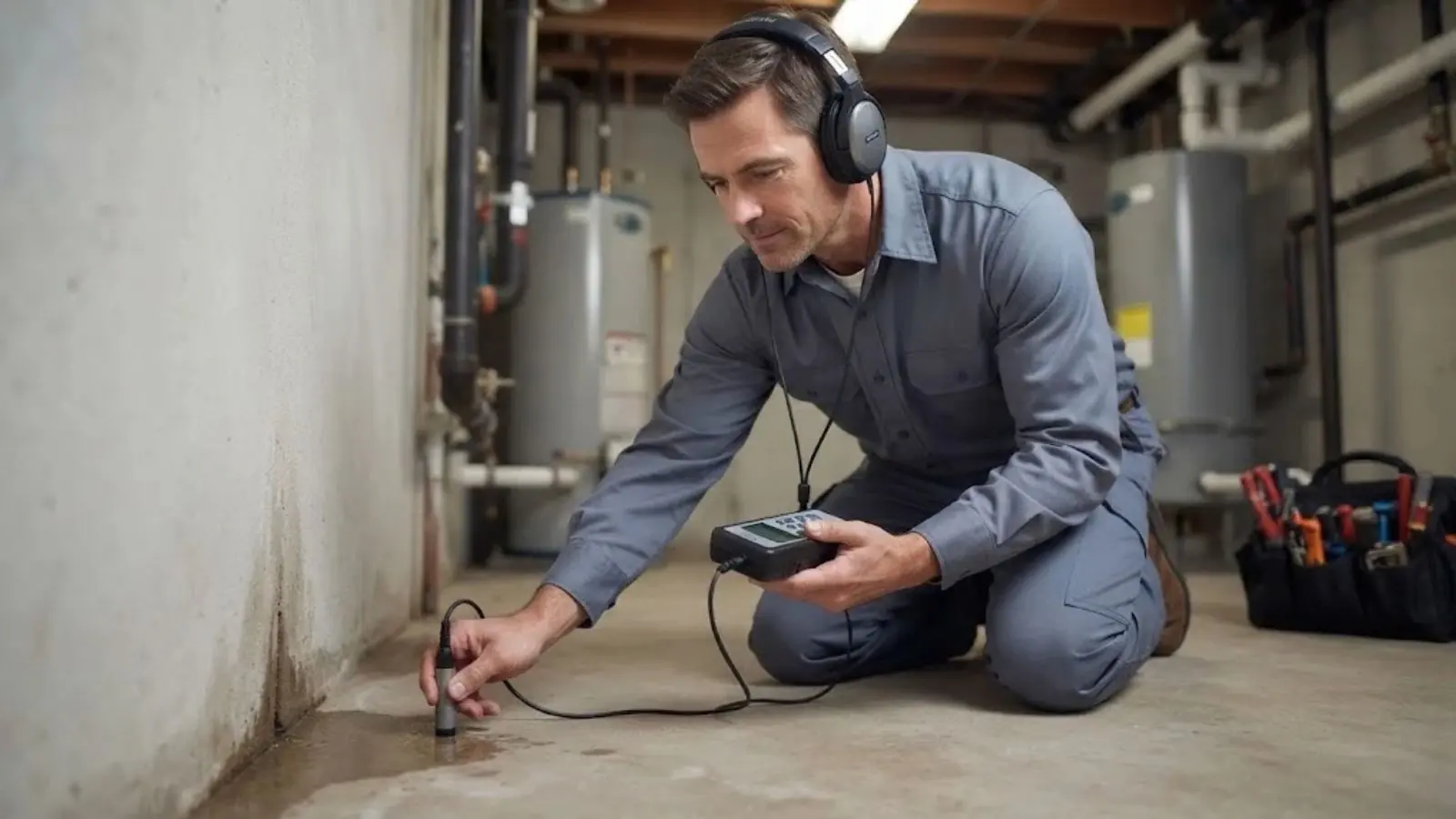
When the cause is not obvious, a plumber uses acoustic listening devices and thermal imaging to trace the pipe. Our page on leak detection explains how that works, and burst pipe repair covers a pipe that has actually let go.
Which setup fits your home.
| Situation. | Sensible setup. | Why. |
|---|---|---|
| Renter in an apartment. | Two or three puck sensors by the sink, toilet and washer. | Low cost, easy to move, warns you before a small leak reaches the unit below. |
| Owner with a finished basement. | Sensors plus an automatic shutoff valve on the main. | Stops a failure from flooding finished space. |
| Owner of a two-family house. | Sensors in each unit and a flow monitor on the main. | Covers shared lines and units that are empty at times. |
| Basement with a sump pit. | A sensor beside the pit and a pump alarm. | Warns you when the pump falls behind. |
No sensor replaces a plumber for the leaks it cannot see. Slow leaks in a slab or a wall show up as a high bill, a damp spot or the sound of water, and a meter check is the first test.
Batteries, testing and false alarms.
A sensor you never test is a guess. Press the test button when you change your clocks, and once a year pour a spoonful of water on each puck to confirm it sounds. Replace the batteries on the schedule the maker gives, even if the device still chirps.
False alarms usually come from a wet mop, a spilled glass or condensation on a cold pipe. Move the sensor an inch or two away from the spot and see if the alarm stops. Do not remove a sensor just because it went off once.
Bayonne note: the water meter and who looks after the street.
Veolia operates the water mains in Bayonne and the city keeps ownership of the system. Veolia's own page about the system says about 40 percent of purchased water was lost to leaks, which shows how much old infrastructure sits under the street. Your sensor protects the inside of your house, not the main.
If the meter keeps moving after you have shut every fixture and your sensors stay dry, the leak may be on your service line or in a wall. Ask Veolia where its responsibility ends, and call us for the part inside your property. We also serve Jersey City and Hoboken if you own property there.
Source type: Veolia Bayonne water system page and City of Bayonne notices.
Questions Bayonne homeowners ask about leak sensors.
Not directly. A sensor only trips when water reaches it. A flow monitor on the main line can catch a slow leak inside a wall, and a plumber can locate it with acoustic tools.
Start with the water heater, the washer, the kitchen sink and the basement low point. Add more near bathrooms and any sump pit. More is better in a house you leave empty.
Only if it is paired with an automatic shutoff valve. The valve closes the main supply when a sensor trips, so a plumber should install it correctly.
A leak that does not reach a sensor, such as a running toilet or a pipe in a wall, can still raise the bill. Do the meter test and call a plumber if the meter moves.
A leak in the street main is a utility issue. Veolia operates the water system in Bayonne, and the city's notices list Veolia customer service at 888-434-0518. A leak inside your property is a plumber's job.