
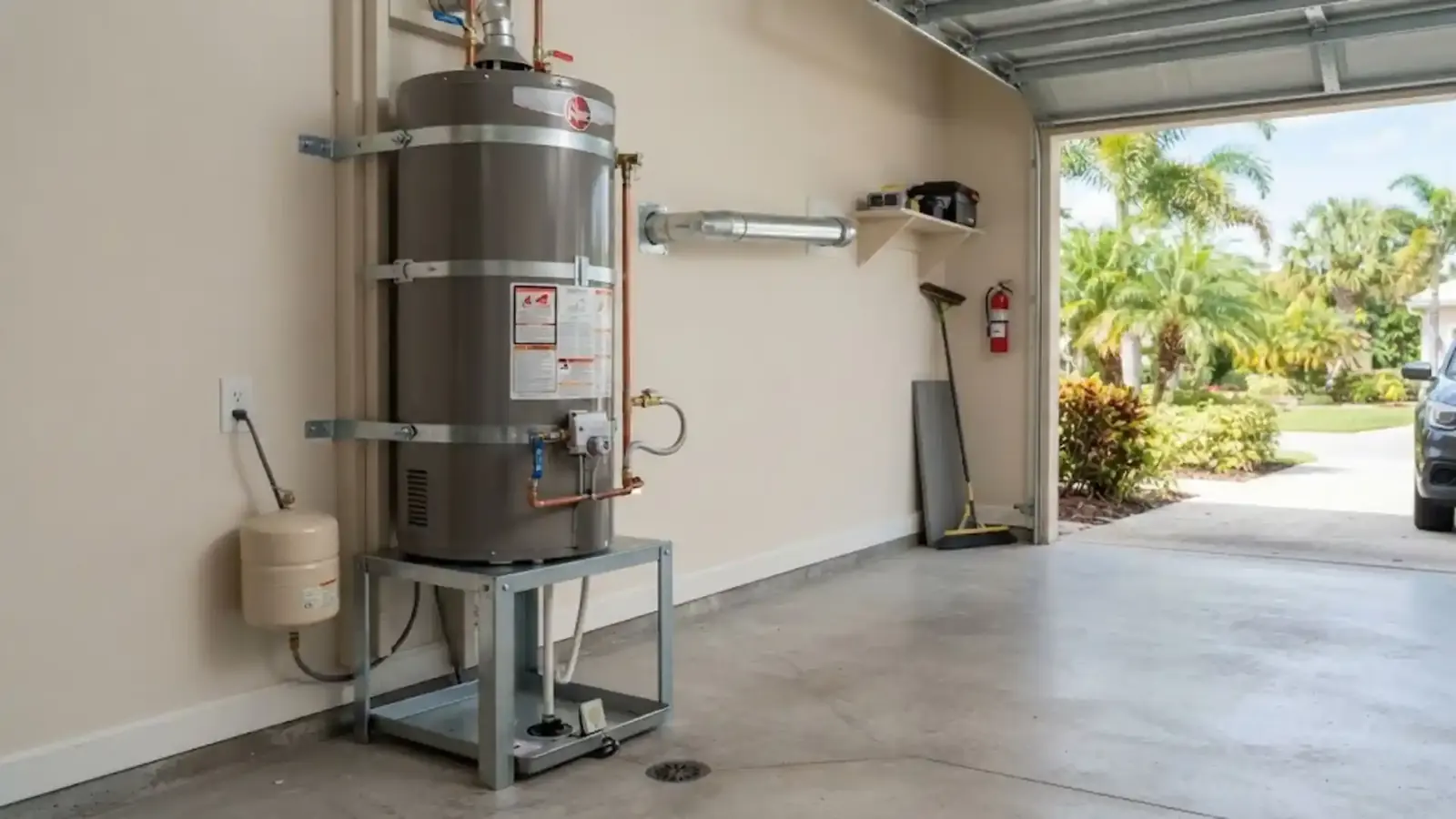
What a water heater installation fee includes.
A fair quote lists the heater itself and the labor to remove the old unit and set the new one. It also lists the parts that connect it. Those are supply lines, shutoff valves and a temperature and pressure relief valve with a drain line. A gas unit adds a gas connector and a vent, and many installs add an expansion tank.
Ask whether the price includes haul-away of the old tank, permits and a test of the vent and gas connection. A low number that leaves those out is not low. Ask the plumber to put the scope in writing before work starts.
| Line on the quote. | What it covers. | Why it changes the price. |
|---|---|---|
| Water heater unit. | Tank size, fuel and efficiency. | Larger and more efficient units cost more. |
| Labor. | Removal, setting, connections, startup and testing. | Tight basements and stairs add time. |
| Venting. | Vent pipe, connectors and termination. | A new or corrected vent adds parts and labor. |
| Gas or electric work. | Gas line changes or a new circuit. | Upsizing or rerouting is separate work. |
| Code parts. | Relief valve piping, expansion tank, shutoffs. | Required parts depend on the setup. |
| Haul-away and permit. | Old tank removal and filings. | Depends on location and rules. |
The factors that move the fee most.
Fuel type and venting move the price more than anything else. Swapping a gas tank for a new gas tank in the same spot is the simplest case. Moving from gas to electric, or from a tank to a tankless unit, changes the gas, vent or electrical work.
Access matters too. A heater on the ground floor with a clear path is quick to replace. A heater in a basement with narrow stairs or a tight closet takes longer, and a plumber who sees that first will price it honestly.
- Size: match tank capacity to how many people use hot water at once..
- Fuel: gas or electric depends on what the building already has..
- Venting: an old or damaged vent often has to be corrected before the new unit starts..
- Location: a basement, closet or attic changes the labor..
- Add-ons: an expansion tank, a drain pan or a new shutoff are common parts of a proper install..
Questions to ask before you say yes.
- Is the price for the whole installation, or only for the heater and basic labor?
- Does it include permits, haul-away and a leak and vent test?
- What happens if the plumber finds a problem with the vent or gas line after the old tank comes out?
- What is the warranty on the unit, and what covers the labor?
- Is the price good for same-day work, or does it change?
You can compare options on our water heater installation page, and if the tank is already leaking, emergency water heater replacement explains the faster path.
Replace in kind or change the setup.
The cheapest install is the one that changes the least. A like-for-like swap keeps the same fuel, the same location and the same vent. Every change adds a line to the quote, and that line is fair only if it solves a real problem.
Moving from a tank to a tankless unit is a different job. It may need a larger gas line, a new sealed vent and a condensate drain. Moving a heater to a new room means new supply and drain piping. Ask the plumber which changes are required and which are options.
A good quote separates the two. You can then choose the required work now and decide about the optional work with the number in front of you.
Red flags in a quote.
- A price with no scope written down.
- A quote that leaves out the vent, the relief valve piping or the permit.
- Pressure to decide on the phone before anyone has seen the space.
- A plumber who cannot give a license number when asked.
- A promise of a fixed price before anyone has looked at the vent or gas line.
Timing and access.
A planned install lets you compare quotes and choose a time. An emergency swap on a cold night leaves little room to compare. If your tank is old, rusty at the base or damp underneath, plan the replacement before it fails.
Clear the space around the heater before the plumber comes. A path to the unit and a dry floor save time on the job.
Bayonne note: licensing, permits and the 2026 advisory.
New Jersey's Board of Examiners of Master Plumbers says plumbing is to be performed by a master plumber, an authorized plumbing contractor or their employees. Ask any installer for a license number and check it with the Division of Consumer Affairs before you sign.
The Bayonne building department is at 630 Avenue C, and permit rules vary by project, so ask the office what applies to a replacement in your building. After the boil water advisory of January 22 to 24, 2026, the city suggested that water heaters set below 113 degrees Fahrenheit be drained and refilled. If your old tank has not been flushed in years, mention it to the installer. We also install in Jersey City and Hoboken.
Source type: New Jersey Division of Consumer Affairs plumbing board FAQ, City of Bayonne building department page and the city's January 2026 advisory notices.
Questions Bayonne homeowners ask about installation fees.
One may include venting, permits and haul-away and the other may not. Compare the scope line by line, not just the total.
It can. A corroded or poorly sloped vent has to be corrected for a gas heater to run safely. Ask the plumber how they handle that before work starts.
It depends on how much hot water you use and how long you will stay. The plumber can compare running costs for your household.
Often yes on a closed system, because heated water expands and raises pressure. The plumber checks your system and explains whether one is needed.
You can. New Jersey says plumbing work belongs to a master plumber or an authorized plumbing contractor. Ask for the number and look it up with the Division of Consumer Affairs.