
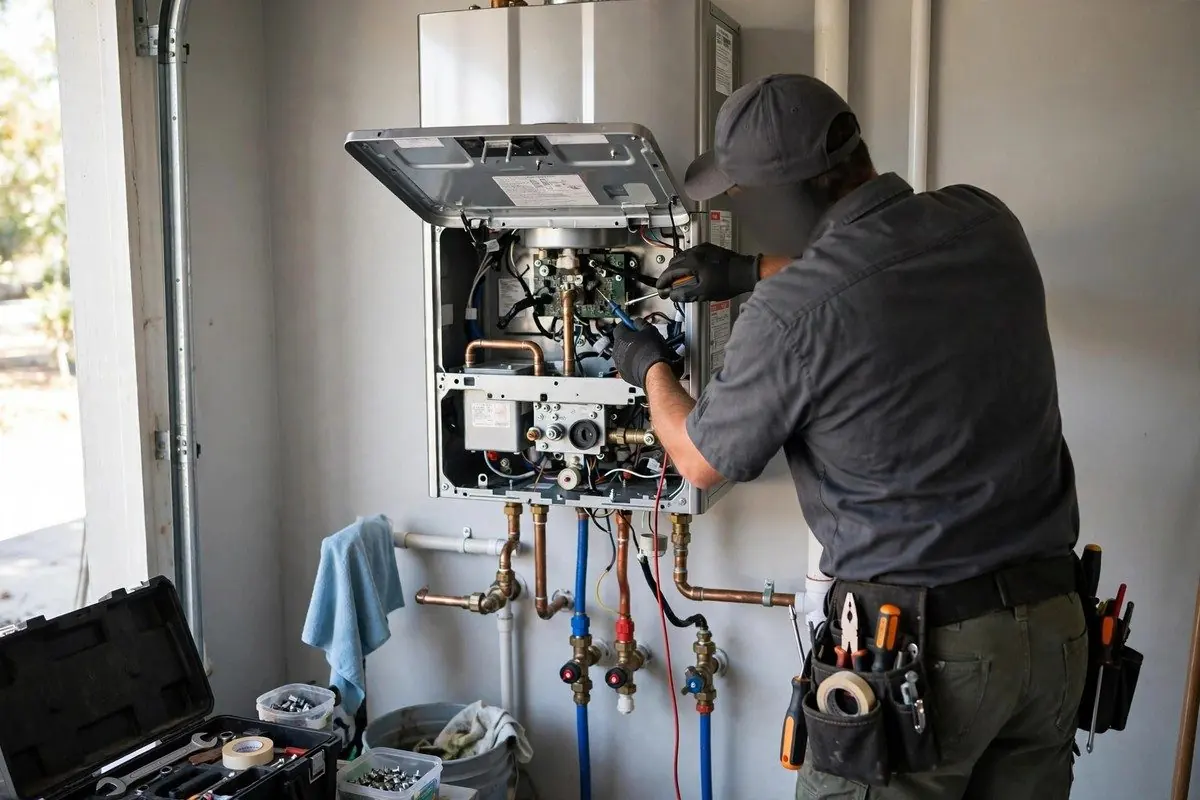
What a water heater gas valve does.
The gas control valve sits at the bottom of the tank. It has a thermostat sensing the water temperature, a pilot safety that proves the pilot flame is lit and a valve that lets gas reach the burner. The knob sets the temperature and the pilot mode.
A related part, the thermocouple, sits in the pilot flame and generates a small signal that tells the valve to stay open. When it fails or the pilot flame is weak, the valve closes and the pilot goes out. That is why a heater that will not hold a pilot is often a cheap part, and sometimes the valve itself.
Pilot will not stay lit.
A worn thermocouple, a dirty pilot or a weak valve can shut the gas as soon as you release the knob.
Burner never fires.
The valve may not open even when the pilot is lit and the water is cold.
Burner will not shut off.
A valve that sticks open overheats the tank, and the relief valve may discharge.
Gas smell near the heater.
Treat this as an emergency and leave the building.
Safety first: what to do and not do.
If you smell gas.
Leave the building at once and move at least 350 feet away. Then call PSE&G at 1-800-880-7734 or 911 from outside. Do not use switches, phones, matches or lighters inside, and do not try to find the leak.
If you only have no hot water and no gas smell, turn the heater's gas knob to off and call a plumber. Do not keep relighting a pilot that will not stay lit. Repeated attempts can let gas collect.
A gas valve repair is not a do-it-yourself job. The plumber shuts off the gas, replaces the valve with the right model, tests every joint for leaks and checks the burner and the vent before using the heater.
Diagnosis and repair: what the plumber checks.
| Check. | What it tells the plumber. | Result. |
|---|---|---|
| Pilot flame. | Strength and color. | Clean the pilot or replace it. |
| Thermocouple signal. | Whether it holds the valve open. | Replace the thermocouple. |
| Valve operation. | Whether gas flows to the burner. | Replace the valve if it fails. |
| Venting and draft. | Whether exhaust leaves the building. | Correct the vent if it is wrong. |
| Tank condition. | Leaks or rust. | Replace the heater if the tank is failing. |
If the tank is old or rusting, a new valve on an old tank may not be worth the spend. The plumber should say so. See water heater replacement for when to swap the whole unit.
Repair costs and what changes the price.
A thermocouple is a small part and a quick job. A full gas control valve costs more and takes longer because the plumber must shut off the gas, swap the control and test every joint. The unit model matters, because valves differ between makers.
The age of the tank changes the math. A sound tank with a failed valve is worth repairing. A tank with rust at the base or a leak from the shell is not, and the plumber should tell you so before replacing parts.
- Ask whether the part is the thermocouple or the whole gas control.
- Ask whether the burner and vent will be checked after the repair.
- Ask for the price of replacement as well, so you can compare.
What to do while you wait for the plumber.
- Turn the heater's gas knob to off and leave it off.
- Do not keep relighting a pilot that will not stay lit.
- Open a window if the room smells stale or sooty.
- Use the stove or an electric kettle to warm water for basic needs.
- Make sure a carbon monoxide alarm is working near the heater.
If anything smells like gas, skip the list and leave the building.
Why not to ignore an on-and-off pilot.
A pilot that goes out now and then is an early warning. A valve or thermocouple that works half the time will fail fully, usually on a cold morning. The longer you relight it, the more often gas can collect near the heater before the pilot catches.
Write down when it goes out. If it happens after a door slams or a fan runs, the cause may be a draft and not a part. Tell the plumber, who will check both.
After the repair: what a good visit leaves you with.
Ask the plumber to show you the pilot and burner flame once the repair is done. The flame should be steady and mostly blue. A lazy yellow flame or one that lifts off the burner needs another look.
Ask what to watch over the next week and whom to call if it repeats. A repair that fixes the cause should hold.
Bayonne note: PSE&G gas pipe work along Avenue C.
PSE&G is replacing aging cast iron gas pipe in Bayonne with plastic or coated steel piping. Its project page lists Avenue C from 21st through 53rd Street and says technicians contact owners to arrange the service line and meter connection to the new main.
If your street was in that work and your heater has acted differently since, tell the plumber about it so the valve and the gas pressure are checked together. The same advice applies if you rent in a building on those streets. We also repair heaters in Jersey City and Hoboken.
Source type: PSE&G Bayonne gas construction page and PSE&G gas leak guidance.
Questions Bayonne homeowners ask about gas valves.
It is not a good idea. Gas work needs correct fittings, leak testing and a vent check. Call a licensed plumber.
A worn thermocouple, a dirty pilot or a failing valve is the usual cause. A plumber tests each one.
If the tank is sound, often yes. If the tank is rusty or leaking, replacing the heater makes more sense.
Leave the building, move away and call PSE&G at 1-800-880-7734 or 911 from outside.
It can, if your service line or meter was reconnected. PSE&G lists work along Avenue C from 21st through 53rd Street, and a plumber can check the connection.