
What liquid clog remover really does.
Most liquid drain openers are strong chemicals. Some are caustic, built to break down grease and hair. Others are acidic, built for different kinds of buildup. In a toilet, the liquid has to reach the clog, which sits below a standing column of water, so a lot of the product just dilutes in the bowl.
When a clog is soft, such as too much paper, the liquid may help the water work through it. When the clog is a toy, a wipe or a hard mass, it usually will not. The risk is the chemical left standing in the bowl. If the clog does not clear, the next person to work on the toilet meets a bowl of caustic liquid.
Splash risk.
A plunger or auger pushed into a bowl of chemical can splash it onto skin, eyes and the floor.
Pipe wear.
Strong chemicals sitting in older pipe and fittings can wear seals and soften some plastics.
Mixing hazard.
Never mix products or follow one with another. Some combinations release harmful fumes.
False progress.
The water may drop a little and leave the clog in place, which returns later.
Try these steps first.
Most toilet clogs clear with mechanical force and patience. The plunger comes first, then the auger. Neither leaves chemical in the bowl.
- Stop flushing and lift the tank lid. If the bowl is rising, close the shutoff valve behind the toilet.
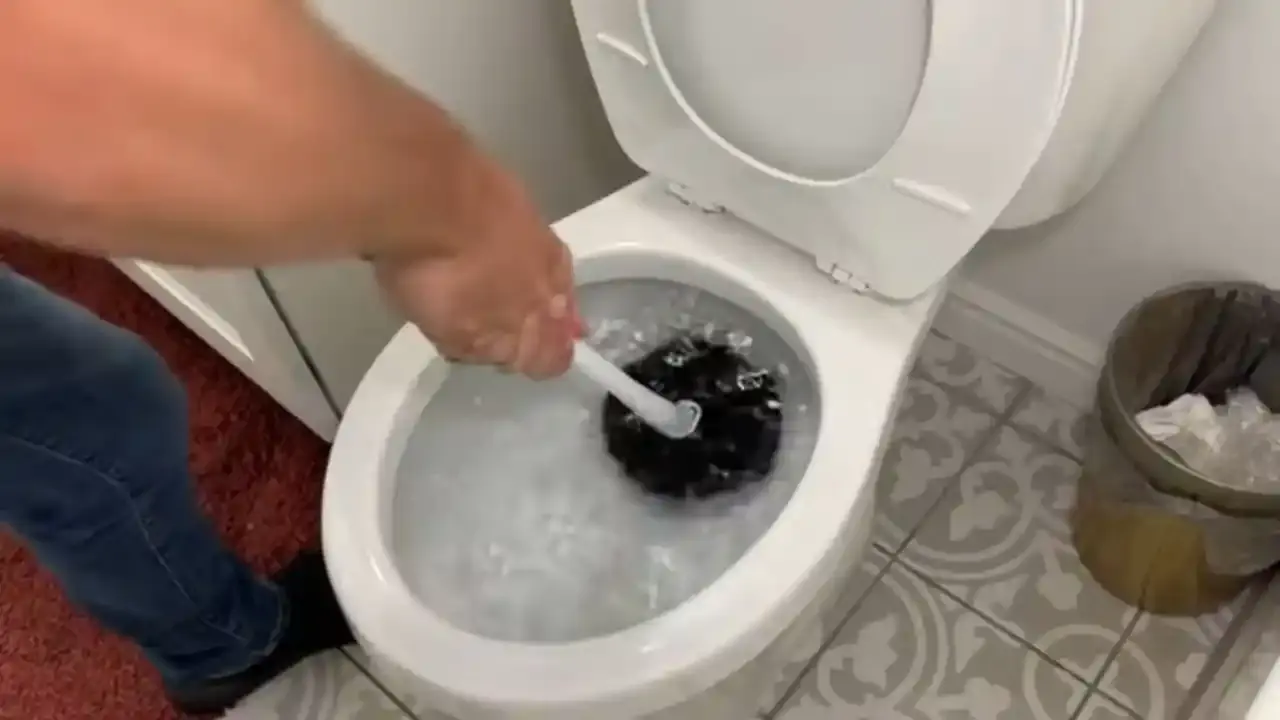
- Use a flange plunger, not a cup plunger. Seat it over the drain opening and push and pull steadily for about a minute.
- Add warm water and a little dish soap, wait several minutes and plunge again.
- If water still sits high, use a toilet auger. Feed it in gently and turn the handle to break up or hook the clog.
- Flush once to test. If the water rises, stop and call a plumber.
| Method. | Works for. | Avoid when. |
|---|---|---|
| Plunger. | Paper and soft clogs. | The bowl is filled with chemical. |
| Toilet auger. | Deeper or stubborn clogs. | You cannot feel the end of the pipe. |
| Liquid remover. | Light soft clogs in a sink, rarely toilets. | You may need to plunge afterward. |
| Plumber with a camera. | Repeat clogs and unknown causes. | Never, if the problem keeps returning. |
When it is the main line and not the toilet.
A single slow toilet is a toilet clog. A toilet that gurgles when the washer drains, or a tub and floor drain that back up with it, points to the main line. No amount of chemical or plunging will clear a blockage in the building drain.
Check the lowest drain in the house. If the basement floor drain is damp or smells, the main line is slow. Stop using water and see sewer line cleaning for what happens next. For a clog that returns every few weeks, a drain cleaning with a camera finds the cause.
What to flush and what to keep out.
- Flush only human waste and toilet paper. Wipes marked flushable still catch in older drains..
- Skip cotton balls, dental floss, feminine products and paper towels..
- Keep a plunger and a toilet auger in the bathroom, not the garage..
- If a child flushed a toy, do not flush again. Call a plumber to retrieve it..
A toilet that clogs often may have a weak flush, a partially blocked rim or a drain problem. The plumber can tell you whether the fix is a new part, a cleaning or a new toilet.
Safer ways to keep a toilet running well.
Most clogs start with habits, not pipes. Use a modest amount of toilet paper, flush twice for a heavy load and keep wipes of every kind out of the bowl. Even products sold as flushable do not break down like paper does.
A weak flush is a clue. Mineral buildup can block the small holes under the rim, and a partly open fill valve can leave the tank short. A plumber can clear the rim holes and set the water level so the bowl empties as it should.
| Habit. | Why it helps. |
|---|---|
| Flush paper in small amounts. | Keeps the drain from loading up at the trap. |
| Bin for wipes and floss. | These do not dissolve and catch on rough pipe. |
| Check the flapper every few months. | A leaking flapper wastes water and weakens the flush. |
| Keep a plunger in the bathroom. | You act before the water rises. |
Bayonne note: storms, sewers and a toilet that will not drain.
Veolia operates Bayonne's sewer lines for the city. If your toilet backs up only after heavy rain, the cause may be capacity in the street and not a clog in your pipe. The city has posted public notices for a relief sewer and an underground retention basin near Cottage Street Park, aimed at reducing flooding.
If neighbors on your block have the same problem at the same time, tell Veolia. If it is only your house, call a plumber. We cover Bayonne first and also serve Jersey City and Hoboken for the same kind of call.
Source type: City of Bayonne public notice for the Cottage Street Park flood mitigation project and Veolia's role in the system.
Questions Bayonne homeowners ask about clogged toilets.
It carries risks. The chemical can splash and may sit in the bowl if the clog does not clear. A plunger or toilet auger is a safer first step.
Follow the label. If the clog has not cleared by then, do not pour more. Wear gloves and eye protection if you must plunge, or call a plumber.
Not if you use a flange plunger and steady pressure. Avoid forcing a plunger against a cracked bowl.
A weak flush, a partial blockage deeper in the drain or a pipe defect is often the reason. A camera inspection shows what is happening.
It may be capacity in the street system and not a clog. Tell the plumber and Veolia, because Bayonne has posted flood notices near Cottage Street Park.