
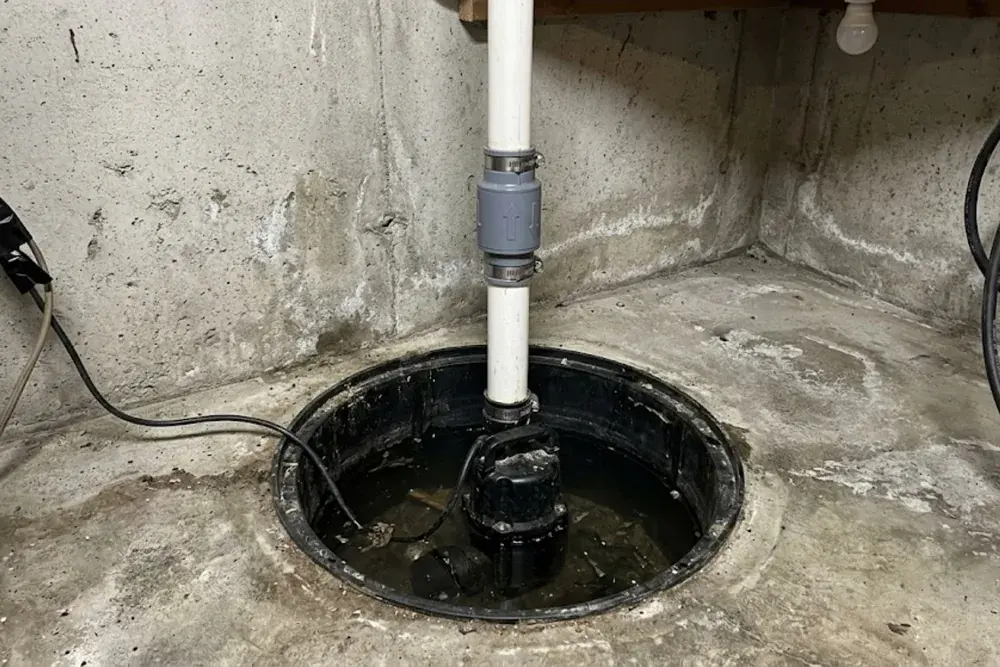
Common sump pump problems.
| Symptom. | Likely cause. | What happens next. |
|---|---|---|
| Runs constantly. | Stuck float switch or a high water table. | Reset or replace the switch, then look at the water source. |
| Does not run at all. | No power, tripped breaker or failed motor. | Check the outlet and breaker, then test the float. |
| Runs but pumps little water. | Clogged intake or worn impeller. | Clean the intake or replace the pump. |
| Loud rattle or grinding. | Debris in the impeller or a failing bearing. | Clear debris or replace the pump. |
| Water returns after pumping. | Check valve missing or failed. | Fit or replace the check valve. |
A pump that runs nonstop on a dry day is a warning. It may be cycling because the float is stuck, or because water is entering the pit faster than it should. Both need a look.
Repair or replace: how to decide.
A pump with a stuck float or a clogged intake is cheap to fix. A pump with a noisy motor, rust at the base or a long service life is usually better replaced. A repair that buys a few weeks is a poor deal before storm season.
- Repair when the fault is a float, a check valve or a clog and the pump is otherwise sound..
- Replace when the motor is noisy, the housing is cracked or the pump is old..
- Replace when the pump cannot keep up with the water that reaches the pit..
- Consider a battery backup if power often fails during storms..
Our sump pump repair page lists the symptoms we diagnose. If the basement already floods during storms, basement waterproofing looks at where the water is coming from.
Getting ready before the storm.
- Pour a bucket of water into the pit and watch the pump start, pump out and shut off.
- Check that the discharge pipe is clear and sends water away from the foundation.
- Clear debris from the pit and the pump intake.
- Check the outlet and the breaker, and plug the pump directly into the outlet.
- Think about a battery backup or a second pump if the basement is finished.
Test again after any plumbing work in the basement. A pit disturbed by other work sometimes ends up with a pump sitting tilted or a float jammed against the wall.
Types of sump pumps and which fits.
| Type. | Where it sits. | Strength. | Trade-off. |
|---|---|---|---|
| Submersible. | Inside the pit, under water. | Quiet and handles more volume. | Harder to reach for service. |
| Pedestal. | Motor above the pit. | Easier to service. | Louder and takes more room. |
| Battery backup. | A second pump beside the main one. | Works when power fails. | Needs a charged battery. |
| Water-powered backup. | Runs on household water pressure. | No battery needed. | Uses water and needs adequate pressure. |
Most homes use a submersible pump as the main unit. A backup is a second layer. The plumber sizes the pump to the water that reaches the pit, not just to the size of the basement.
Pit, discharge and check valve: the parts around the pump.
The pump gets the attention, but the pit and the discharge line matter just as much. A pit that is too small makes the pump cycle on and off quickly, which wears it out. A discharge line that ends too close to the house sends water back to the foundation.
The check valve sits on the discharge pipe and keeps water from draining back into the pit after the pump stops. If you hear a thump after each cycle, the check valve may be failing. Replacing it is a short job.
- Pit lid in place and sealed where required..
- Float free to move and not touching the wall..
- Discharge line pitched away from the house..
- Check valve present and working..
- Dedicated outlet or hardwired circuit..
What a replacement visit includes.
- The plumber disconnects power and removes the old pump and its check valve.
- The pit is cleaned of silt and debris.
- The new pump is set level, the float is placed to move freely and the discharge is connected.
- A new check valve is fitted on the discharge line.
- The plumber fills the pit, watches the pump cycle and checks every joint for drips.
Ask whether the discharge line outside is clear and pitched away from the house. A new pump pushing water to a blocked or short pipe solves nothing.
If the old pump failed at the start of a storm, ask about a backup system while the plumber is there. The same visit can add it at less cost than a second trip.
Signs the water source needs attention.
A pump that runs often in dry weather suggests a high water table or a leak. A plumber can check supply lines and the meter to rule out a plumbing leak. If the pit fills from groundwater alone, the answer is a stronger pump or better drainage around the house.
Look at the gutters and downspouts too. Water dumped beside the foundation ends up in the pit, and a downspout extension is the cheapest fix there is.
Bayonne note: power outages and the 63rd Street Pumping Station.
Bayonne is a peninsula, and public notices from the city describe flood-related projects. The city's 2023 notice for backup power at the 63rd Street Pumping Station places the site in the 100-year floodplain on the preliminary flood map. A pump that depends on household power fails when the power does.
If your basement is in a low area, a battery backup is worth asking about. We also repair pumps in Jersey City and Hoboken, where flood risk is a regular concern.
Source type: City of Bayonne public notice for the 63rd Street Pumping Station backup power project.
Questions Bayonne homeowners ask about sump pumps.
Test it at least before each wet season by filling the pit with water and watching it cycle.
A stuck float, a high water table or a leaking pipe can cause it. A plumber can tell which.
It helps if your power fails during storms and the basement is finished. Ask the plumber to size it.
It depends on use and quality. A noisy or old pump is a candidate for replacement before storm season.
The city's notices place some pumping facilities in the 100-year floodplain. Check the flood map for your address and ask the plumber about backup power.