
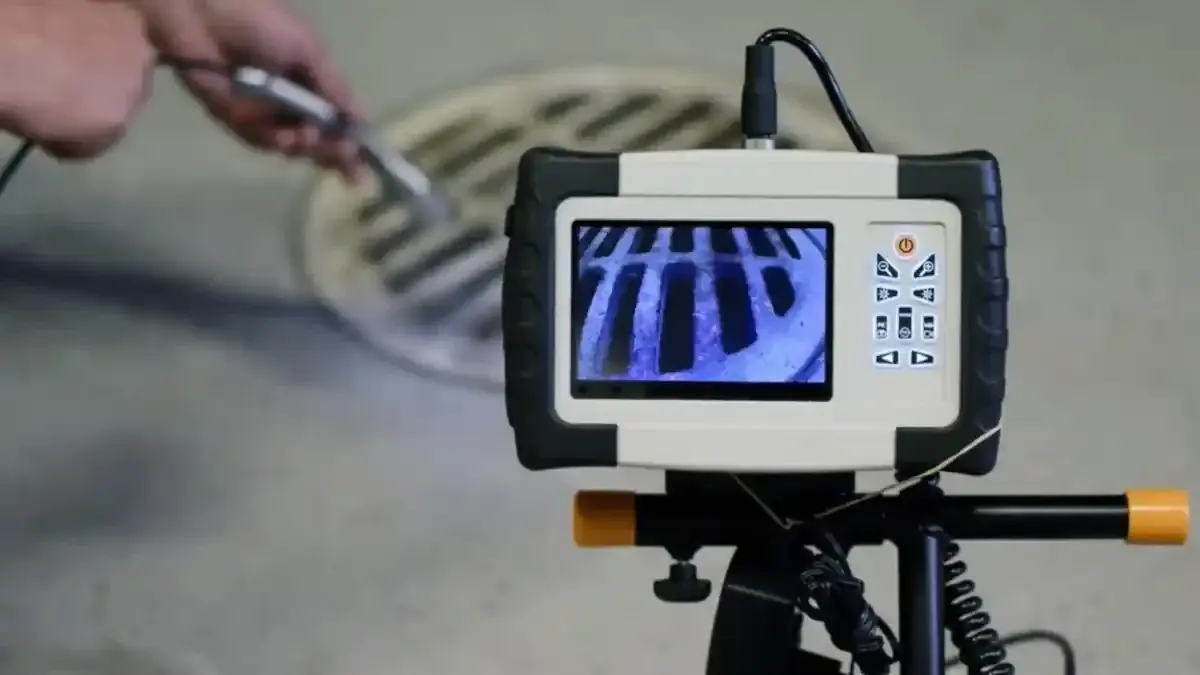
What a sewer scope shows.
The camera travels from a cleanout toward the street, sending video to a screen. The plumber watches for pipe material, joints, cracks, roots and low spots where water sits. A locator at the surface can mark the depth and position of a problem.
| What the camera finds. | What it means. | Likely next step. |
|---|---|---|
| Roots in joints. | Roots entered through small gaps. | Cut roots, then monitor or repair the joint. |
| A sag or belly. | A low section holds water and waste. | Watch it, clean it or repair the section. |
| Cracked or broken pipe. | The line is damaged. | Spot repair or replacement. |
| Scale or grease buildup. | Narrowed pipe. | Cleaning. |
| Offset joint. | Sections have shifted. | Repair depending on the gap. |
| Clean pipe. | No visible defects. | Keep the video for your records. |
When a scope is worth doing.
- Before buying a house, especially an older one..
- After repeated clogs or a slow main line..
- When several drains gurgle or back up together..
- Before a landscaping or excavation project near the line..
- After a heavy cleaning to confirm the pipe is clear..
A scope will not fix anything, but it turns a guess into a decision. A line with minor scale needs cleaning, and a line with a collapsed section needs repair. Our sewer inspection page describes the visit, and sewer line repair covers what happens if the camera finds damage.
How to use the result.
- Ask for the video and a short written note of what was found and where.
- Ask the plumber to mark the location of any defect and give its approximate depth.
- Ask which findings need action now and which can be watched.
- Compare options for any repair, from spot repair to replacement.
- Keep the video. It helps with a purchase negotiation or an insurance question.
If you are buying, share the findings with your agent and ask whether the seller will repair the line, credit the cost or adjust the price. If you already own the home, a clean video is a baseline for later comparison.
How a scope is done, step by step.
- The plumber finds the cleanout or another access point and clears the way.
- A camera on a flexible rod goes into the line and moves toward the street.
- The plumber watches the screen and records video as the camera moves.
- A locator at the surface marks the depth and position of any defect.
- The plumber removes the camera, cleans it and explains what was seen.
If the line is full of grease or roots, the plumber may need to clean it first so the camera can pass. That is a separate step and is quoted separately.
Reading the video: what is a problem and what is not.
Not every mark on a pipe is a defect. Light scale or a slight offset at a joint can be normal in an older line. The concern is a defect that grows, such as a root mass, a crack that opens or a sag that holds standing water.
| Finding. | Urgency. | Reasoning. |
|---|---|---|
| Light scale. | Low. | Cleaning is enough. |
| Small root intrusion. | Medium. | Roots return and widen the gap. |
| Standing water in a sag. | Medium. | Solids collect and block the line over time. |
| Broken or collapsed pipe. | High. | The line may fail completely. |
| Missing section. | High. | Soil can enter the line. |
Ask the plumber to explain each finding in plain words and to say what happens if you do nothing for a year.
What a scope costs less than.
A scope costs a fraction of an excavation. It tells you where the pipe is bad, so the repair can be limited to the section that needs it. Without a scope, a plumber may have to dig more than needed to find the problem.
For a buyer, the value is knowing about a failing line before closing. For an owner, it is a way to plan a repair for a convenient time instead of reacting to a backup in the middle of the night. See sewer line cleaning for what happens when a line only needs clearing.
Before and after a purchase.
If you are buying, schedule the scope within your inspection window so the result can shape the negotiation. Ask the seller for any record of past sewer work. If the camera cannot pass a section, ask what that means and how to get a clear view.
After you own the house, a scope every few years on an older line gives you a trend. A clean video this year and a growing root mass in three years tells you when to act.
Keep the videos in a folder with the date. A plumber can compare them, and a future buyer may ask for them.
Questions to ask the plumber before the camera goes in.
- Will you give me the video and a written summary?
- Can you mark the position of any defect on the ground?
- What happens if the line is too dirty to scope?
- Is the price for the scope separate from any cleaning?
Clear answers up front keep the visit simple and the price honest.
Bayonne note: who owns what and where to find records.
Veolia operates the sewer lines in Bayonne for the city, and the city keeps ownership of the system. In general the line from your building to the connection at the street is the owner's responsibility, but ask Veolia where its responsibility starts for your address, because it can differ.
The building department at 630 Avenue C keeps permit records, and asking whether past sewer work was permitted can help in a purchase. We scope lines in Bayonne first and also in Jersey City and Hoboken.
Source type: City of Bayonne notices on Veolia's role and the building department page.
Questions Bayonne homeowners ask about sewer scopes.
Most take under an hour once the plumber can get a camera into a cleanout.
A cleanout makes it easy. Without one, the plumber may enter through a toilet or a vent, which takes more care.
It finds what the camera can see in the pipe. Fine cracks and joints may need a second look after cleaning.
It is a good idea for an older house. The result helps you negotiate or plan repairs.
Veolia operates the sewer system for the city. The owner is generally responsible for the line serving the building, so ask Veolia where responsibility changes at your address.